One of the most repugnant political faults is hypocrisy. Politicians say one thing, then do the opposite. This leaves a bad taste in the mouth, and brings public life into disrepute.
The British Foreign Secretary Dominic Raab is a case in point. Sunday saw a grim example of Raab’s double dealing. He said that he supported free speech. “A strong and independent media,” declared the foreign secretary, “is more important than ever.”
Splendid words on World Press Freedom Day.
If only the British foreign secretary had meant a word he said. As Raab spoke up for free speech, his cabinet colleague Oliver Dowden led the latest government assault on the BBC.
Threatening the media
In a move pregnant with menace, Dowden dispatched a letter to BBC director general Tony Hall complaining about last week’s Panorama documentary which exposed shortages of personal protective equipment (PPE) and expressed concern that health workers will die from the Covid-19 virus.
Nothing shows the emptiness of Raab’s claims about committing to media freedom than the government’s handling of the Julian Assange case
With his government threatening the media over coronavirus in the UK, it’s no surprise that the foreign secretary has had nothing to say about Egypt’s throwing out of the country of a Guardian journalist in March after she reported on a scientific study that said the country was likely to have many more coronavirus cases than have been officially confirmed.
A foreign office spokesman came up with this: “The UK supports media freedom around the world. We have urged Egypt to guarantee freedom of expression. UK ministers have raised this case with the Egyptian authorities.”
The foreign secretary has had nothing to say either about Amnesty’s bleak report yesterday revealing that Egyptian journalists are being flung into jail and accused of terrorism for reporting stories that annoy the regime of President Abdel Fattah el-Sisi.
Saudi Arabia, a British ally, jailed 26 journalists last year alone. Did the foreign office have anything to say? If so I can’t find it. No wonder that Britain has dropped to 35th out of 180 countries in Reporters Without Borders’ 2020 World Freedom Index.
Last week, the foreign secretary claimed that the United Kingdom “remains committed to media freedom” during the coronavirus crisis. This, unfortunately, is not true. Nothing shows the emptiness of these claims more than the British government’s handling of the Julian Assange case.
The gory truth
The Wikileaks founder continues to rot in Belmarsh jail as the US demands his extradition on espionage charges. If there was an ounce of sincerity in the foreign secretary’s claim that he is a supporter of media freedom, he would be resisting the US attempt to get its hands on Assange with every bone in his body.
There’s not the slightest suggestion that he’s doing that. As Human Rights Watch has pointed out, the British authorities have the power to prevent any US prosecution from eroding media freedom. Britain has so far – at least – shown no appetite to exercise that power. Unfortunately for Raab, Assange’s real crime is doing journalism.
Assange has done more than every other journalist in Britain put together to shed light on the way the world truly works
I’ve never met Assange. Some people that I know and respect say that he is vain and difficult. I believe them. There’s no denying, however, that Assange has done more than every other journalist in Britain put together to shed light on the way the world truly works.
For example, thanks to Assange that we now know about many violations including: British vote-trading with Saudi Arabia to ensure that both states were elected onto the United Nations human rights council in 2013; the links between the fascist British National Party and members of the police and army; the horrifying details of civilians killed by the US army in Afghanistan.
And the US helicopter gunmen laughing as they shot and killed unarmed civilians in Iraq, including two Reuters journalists. An incident that the US military lied about, claiming at first that the dead were all insurgents.
Britain’s Foreign Secretary Dominic Raab arrives in Downing Street in central London on April 30, 2020 for the daily novel coronavirus COVID-19 briefing
Britain’s Foreign Secretary Dominic Raab arrives in Downing Street in central London on 29 April (AFP)
I could go on and on. Vanity Fair called the release of Assange’s stories “one of the greatest journalistic scoops of last thirty years”. And so it was. This wasn’t espionage, as the US claims. It was journalism.
Journalism not a crime
The US authorities aren’t out to get Assange because he’s a spy. They want him behind bars for his journalism.
That’s why the consequences are so chilling if Britain gives into the US extradition request and allows Assange to face trial in the United States. Not just for Assange, who faces a long prison sentence (up to 175 years) from which he will almost certainly never emerge.
When we think of the repression of journalists, we automatically evoke foreign lands. We rarely, however evoke or remember our own dissidents
We should be under no illusions. If successful, the US indictment against Assange will have terrible consequences for the free press.
The charges, in the words of former Guardian editor Alan Rusbridger, look like an attempt to “criminalise things journalists regularly do as they receive and publish true information given to them by sources or whistleblowers. Assange is accused of trying to persuade a source to disclose yet more secret information. Most reporters would do the same. Then he is charged with behaviour that, on the face of it, looks like a reporter seeking to help a source protect her identity. If that’s indeed what Assange was doing, good for him.”
Yet, British newspapers will not fight for Assange. Whether left or right, broadsheet or tabloid, British papers are agreed on one thing; they’ll fall over each other to grab the latest official hand-out about British Prime Minister Boris Johnson and his fiance Carrie Symonds’ baby. Or the new Downing Street dog.
They will, however, look the other way when it comes to standing up for press freedom and Julian Assange.
Client journalism
How pathetic. What a betrayal of their trade. Client journalism. An inversion of what newspapers stand for. If the British foreign secretary is two-faced about a free press, so are British newspaper editors who say they care about press freedom. With even less excuse.
To be fair, it’s not so much that they fail to oppose Assange’s extradition. It’s more that they ignore almost completely one of the most powerful threats to press freedom of modern times.
Julian Assange should be thanked – not smeared – for Wikileaks’ service to journalism
Read More »
If they did care, they’d be campaigning to keep Assange out of the clutches of the US. Meanwhile, doctors warn that Assange’s health is so bad that he may die in Belmarsh prison.
Nils Melzer, the UN special rapporteur on torture, voiced strong concerns over the conditions of his detention, saying that “the blatant and sustained arbitrariness shown by both the judiciary and the government in this case suggests an alarming departure from the UK’s commitment to human rights and the rule of law. This is setting a worrying example, which is further reinforced by the government’s recent refusal to conduct the long-awaited judicial inquiry into British involvement in the CIA torture and rendition programme.”
Kenneth Roth of Human Rights Watch has soberly noted in connection with the Assange case that “many of the acts detailed in the indictment are standard journalistic practices in the digital age. How authorities in the UK respond to the US extradition request will determine how serious a threat this prosecution poses to global media freedom.”
As Assange rots in Belmarsh, how dare the British foreign secretary abuse his office by pretending to care about the liberty of the press!
I applaud a device like World Press Day. It’s a way of thinking about all the journalists around the world who suffer personally for their profession, through repression, prison, torture and death. Simply because they did their job by revealing uncomfortable facts.
When we think of the repression of journalists, we automatically evoke foreign lands – Saudi Arabia, Iran, Turkey, Egypt. We rarely, however evoke or remember our own dissidents.
Julian Assange is one of them.
The views expressed in this article belong to the author and do not necessarily reflect the editorial policy of Middle East Eye.
Peter Oborne
Peter Oborne won best commentary/blogging in 2017 and was named freelancer of the year in 2016 at the Online Media Awards for articles he wrote for Middle East Eye. He also was British Press Awards Columnist of the Year 2013. He resigned as chief political columnist of the Daily Telegraph in 2015. His books include The Triumph of the Political Class, The Rise of Political Lying, and Why the West is Wrong about Nuclear Iran.
British Judge Vanessa Baraitser has suspended the extradition hearing for WikiLeaks founder Julian Assange until mid-May. This comes after four days of intense deliberations last week between Assange’s legal team and attorneys representing the United States government. Assange faces 18 charges of attempted hacking and breaches of the Espionage Act for his role in publishing classified documents exposing U.S. war crimes in Iraq and Afghanistan. He could be sentenced to up to 175 years in prison. Assange has been held in London’s Belmarsh prison since last April, when he was removed from the embassy by British police. We speak with Jennifer Robinson, a human rights attorney who has been advising Julian Assange and WikiLeaks since 2010.
El presidente de México, Andrés Manuel López Obrador, pidió este viernes la liberación de Julian Assange, fundador de WikiLeaks, al considerar que los cables que dio a conocer la organización revelaron la “naturaleza autoritaria” del sistema político mundial.
Al ser cuestionado sobre la situación de Assange durante su habitual conferencia de prensa matutina, López Obrador manifestó su solidaridad con el activista y pidió “que se le perdone y se le deje en libertad”.
“No sé si él ha reconocido que actuó en contra de normas y de un sistema político, pero en su momento estos cables mostraron cómo funciona el sistema mundial en su naturaleza autoritaria“, dijo el mandatario mexicano, quien agregó su deseo de que a Assange “no se le siga torturando”.
Al sostener un libro donde se publicaron las filtraciones divulgadas por WikiLeaks, López Obrador señaló: “aquí hay cables que se dieron a conocer cuando nosotros estábamos en la oposición y hablaban de nuestra lucha, y puedo probar que son ciertos, es decir, que lo que aquí se expresa obedece a la realidad de ese entonces, de relaciones ilegales, de actuaciones ilegítimas, violatorias de la soberanía, contrarias a la democracia, lo que aquí se expresa”.
En días recientes, el relator especial sobre tortura de Naciones Unidas, Nils Melzer, denunció que Assange está siendo sometido a torturas psicológicas, que representan un peligro para su vida.
Por ello, López Obrador consideró que la liberación del activista “va a ser una causa muy justa en favor de los derechos humanos “. “No puede darle uno la espalda a los dolores de la humanidad. No puede uno aplicar la política avestruz, de meter la cabeza en la arena. Tiene uno que expresarse”, agregó.
“No puedo opinar” sobre crisis en Irak
La respuesta dio pie a que los periodistas le consultaran al mandatario mexicano sobre el bombardeo de EE.UU. en Irak, que provocó la muerte del máximo general de Irán, Qassem Soleimani, en un hecho que ha encendido señales de alerta en el mundo ante la posibilidad de una nueva guerra en Medio Oriente. Sin embargo, López Obrador se negó a hacer un comentario.
“No me meto en eso, eso tiene que ver con política exterior, no puedo opinar sobre eso”, dijo López Obrador, quien justificó su postura en función de lo establecido en la Constitución mexicana.
For seven years, from the moment Julian Assange first sought refuge in the Ecuadorean embassy in London, they have been telling us we were wrong, that we were paranoid conspiracy theorists. We were told there was no real threat of Assange’s extradition to the United States, that it was all in our fevered imaginations.
For seven years, we have had to listen to a chorus of journalists, politicians and “experts” telling us that Assange was nothing more than a fugitive from justice, and that the British and Swedish legal systems could be relied on to handle his case in full accordance with the law. Barely a “mainstream” voice was raised in his defence in all that time.
From the moment he sought asylum, Assange was cast as an outlaw. His work as the founder of Wikileaks – a digital platform that for the first time in history gave ordinary people a glimpse into the darkest recesses of the most secure vaults in the deepest of Deep States – was erased from the record.
Assange was reduced from one of the few towering figures of our time – a man who will have a central place in history books, if we as a species live long enough to write those books – to nothing more than a sex pest, and a scruffy bail-skipper.
The political and media class crafted a narrative of half-truths about the sex charges Assange was under investigation for in Sweden. They overlooked the fact that Assange had been allowed to leave Sweden by the original investigator, who dropped the inquiry, only for it to be revived by another investigator with a well-documented political agenda.
They failed to mention that Assange was always willing to be questioned by Swedish prosecutors in London, as had occurred in dozens of other cases involving extradition proceedings to Sweden. It was almost as if Swedish officials did not want to test the evidence they claimed to have in their possession.
The media and political courtiers endlessly emphasised Assange’s bail violation in the UK, ignoring the fact that asylum seekers fleeing legal and political persecution don’t usually honour bail conditions imposed by the very state authorites from which they are seeking asylum.
The political and media establishment ignored the mounting evidence of a secret grand jury in Virginia formulating charges against Assange, and ridiculed Wikileaks’ concerns that the Swedish case might be cover for a more sinister attempt by the US to extradite Assange and lock him away in a high-security prison, as had happened to whistleblower Chelsea Manning.
They belittled the 2016 verdict of a panel of United Nations legal scholars that the UK was “arbitrarily detaining” Assange. The media were more interested in the welfare of his cat.
They ignored the fact that after Ecuador changed presidents – with the new one keen to win favour with Washington – Assange was placed under more and more severe forms of solitary confinement. He was denied access to visitors and basic means of communications, violating both his asylum status and his human rights, and threatening his mental and physical wellbeing.
Equally, they ignored the fact that Assange had been given diplomatic status by Ecuador, as well as Ecuadorean citizenship. Britain was obligated to allow him to leave the embassy, using his diplomatic immunity, to travel unhindered to Ecuador. No “mainstream” journalist or politician thought this significant either.
They turned a blind eye to the news that, after refusing to question Assange in the UK, Swedish prosecutors had decided to quietly drop the case against him in 2015. Sweden had kept the decision under wraps for more than two years.
It was a freedom of information request by an ally of Assange, not a media outlet, that unearthed documents showing that Swedish investigators had, in fact, wanted to drop the case against Assange back in 2013. The UK, however, insisted that they carry on with the charade so that Assange could remain locked up. A British official emailed the Swedes: “Don’t you dare get cold feet!!!”
Most of the other documents relating to these conversations were unavailable. They had been destroyed by the UK’s Crown Prosecution Service in violation of protocol. But no one in the political and media establishment cared, of course.
Similarly, they ignored the fact that Assange was forced to hole up for years in the embassy, under the most intense form of house arrest, even though he no longer had a case to answer in Sweden. They told us – apparently in all seriousness – that he had to be arrested for his bail infraction, something that would normally be dealt with by a fine.
And possibly most egregiously of all, most of the media refused to acknowledge that Assange was a journalist and publisher, even though by failing to do so they exposed themselves to the future use of the same draconian sanctions should they or their publications ever need to be silenced. They signed off on the right of the US authorities to seize any foreign journalist, anywhere in the world, and lock him or her out of sight. They opened the door to a new, special form of rendition for journalists.
This was never about Sweden or bail violations, or even about the discredited Russiagate narrative, as anyone who was paying the vaguest attention should have been able to work out. It was about the US Deep State doing everything in its power to crush Wikileaks and make an example of its founder.
It was about making sure there would never again be a leak like that of Collateral Murder, the military video released by Wikileaks in 2007 that showed US soldiers celebrating as they murdered Iraqi civilians. It was about making sure there would never again be a dump of US diplomatic cables, like those released in 2010 that revealed the secret machinations of the US empire to dominate the planet whatever the cost in human rights violations.
Now the pretence is over. The British police invaded the diplomatic territory of Ecuador – invited in by Ecuador after it tore up Assange’s asylum status – to smuggle him off to jail. Two vassal states cooperating to do the bidding of the US empire. The arrest was not to help two women in Sweden or to enforce a minor bail infraction.
No, the British authorities were acting on an extradition warrant from the US. And the charges the US authorities have concocted relate to Wikileaks’ earliest work exposing the US military’s war crimes in Iraq – the stuff that we all once agreed was in the public interest, that British and US media clamoured to publish themselves.
Still the media and political class is turning a blind eye. Where is the outrage at the lies we have been served up for these past seven years? Where is the contrition at having been gulled for so long? Where is the fury at the most basic press freedom – the right to publish – being trashed to silence Assange? Where is the willingness finally to speak up in Assange’s defence?
It’s not there. There will be no indignation at the BBC, or the Guardian, or CNN. Just curious, impassive – even gently mocking – reporting of Assange’s fate.
And that is because these journalists, politicians and experts never really believed anything they said. They knew all along that the US wanted to silence Assange and to crush Wikileaks. They knew that all along and they didn’t care. In fact, they happily conspired in paving the way for today’s kidnapping of Assange.
They did so because they are not there to represent the truth, or to stand up for ordinary people, or to protect a free press, or even to enforce the rule of law. They don’t care about any of that. They are there to protect their careers, and the system that rewards them with money and influence. They don’t want an upstart like Assange kicking over their applecart.
Now they will spin us a whole new set of deceptions and distractions about Assange to keep us anaesthetised, to keep us from being incensed as our rights are whittled away, and to prevent us from realising that Assange’s rights and our own are indivisible. We stand or fall together.
No one pays me to write these blog posts. If you appreciated it, or any of the others, please consider hitting the donate button in the right-hand margin (computer) or below (phone).Julian Assange, media criticism
The film’s contention is that Assange is a natural-born egotist and, however noble his initial project, Wikileaks ended up not only feeding his vanity but also accentuating in him the very qualities — secretiveness, manipulativeness, dishonesty and a hunger for power — he so despises in the global forces he has taken on.
This could have made for an intriguing, and possibly plausible, thesis had Gibney approached the subject-matter more honestly and fairly. But two major flaws discredit the whole enterprise.
The first is that he grievously misrepresents the facts in the Swedish case against Assange of rape and sexual molestation to the point that his motives in making the film are brought into question.
To shore up his central argument about Assange’s moral failings, he needs to make a persuasive case that these defects are not only discernible in Assange’s public work but in his private life too.
We thus get an extremely partial account of what occurred in Sweden, mostly through the eyes of A, one of his two accusers. She is interviewed in heavy disguise.
Gibney avoids referring to significant aspects of the case that would have cast doubt in the audience’s mind about A and her testimony. He does not, for example, mention that A refused on Assange’s behalf offers made by her friends at a dinner party to put up the Wikileaks leader in their home — a short time after she says the sexual assault took place.
The film also ignores the prior close relationship between A and the police interviewer and its possible bearing on the fact that the other complainant, S, refused to sign her police statement, suggesting that she did not believe it represented her view of what had happened.
But the most damning evidence against Gibney is his focus on a torn condom submitted by A to the police, unquestioningly accepting its significance as proof of the assault. The film repeatedly shows a black and white image of the damaged prophylactic.
Gibney even allows a theory establishing a central personality flaw in Assange to be built around the condom. According to this view, Assange tore it because, imprisoned in his digital world, he wanted to spawn flesh-and-blood babies to give his life more concrete and permanent meaning.
The problem is that investigators have admitted that no DNA from Assange was found on the condom. In fact, A’s DNA was not found on it either. The condom, far from making A a more credible witness, suggests that she may have planted evidence to bolster a case so weak that the original prosecutors dropped it.
There is no way Gibney could not have known these well-publicised concerns about the condom. So the question is why would he choose to mislead the audience?
Without A, the film’s case against Assange relates solely to his struggle through Wikileaks to release secrets from the inner sanctums of the US security state. And this is where the film’s second major flaw reveals itself.
Gibney is careful to bring up most of the major issues concerning Assange and Wikileaks, making it harder to accuse him of distorting the record. Outside the rape allegations, however, his dishonesty relates not to an avoidance of facts and evidence but to his choice of emphasis.
The job of a good documentarist is to weigh the available material and then present as honest a record of what it reveals as is possible. Anything less is at best polemic, if it sides with those who are silenced and weak, and at worst propaganda, if it sides with those who wield power.
Gibney’s film treats Assange as if he and the US corporate-military behemoth were engaged in a simple game of cat and mouse, two players trying to outsmart each other. He offers little sense of the vast forces ranged against Assange and Wikileaks.
The Swedish allegations are viewed only in so far as they question Assange’s moral character. No serious effort is made to highlight the enormous resources the US security state has been marshalling to shape public opinion, most notably through the media. The hate campaign against Assange, and the Swedish affair’s role in stoking it, are ignored.
None of this is too surprising. Were Gibney to have highlighted Washington’s efforts to demonise Assange it might have hinted to us, his audience, Gibney’s own place in supporting this matrix of misinformation.
This is a shame because there is probably a good case to make that anyone who takes on the might of the modern surveillance and security empire the US has become must to some degree mirror its moral failings.
How is it possible to remain transparent, open, honest — even sane — when every electronic device you possess is probably bugged, when your every move is recorded, when your loved ones are under threat, when the best legal minds are plotting your downfall, when your words are distorted and spun by the media to turn you into an official enemy?
Assange is not alone in this plight. Bradley Manning, the source of Wikileaks’ most important disclosures, necessarily lied to his superiors in the military and used subterfuge to get hold of the secret documents that revealed to us the horrors being unleashed in Iraq and Afghanistan in our names.
Since he was caught, he has faced torture in jail and is currently in the midst of a show trial.
Another of the great whistleblowers of the age, Edward Snowden, was no more honest with his employers, contractors for the US surveillance state, as he accumulated more and more incriminating evidence of the illegal spying operations undertaken by the National Security Agency and others.
Now he is holed up in a Russian airport trying to find an escape from permanent incarceration or death. Should he succeed, as he did earlier in fleeing Hong Kong, it will probably be because of secrecy and deceit.
This documentary could have been a fascinating study of the moral quandaries faced by whistleblowers in the age of the surveillance super-state. Instead Gibney chose the easy course and made a film that sides with the problem rather than the solution.film review, media criticism
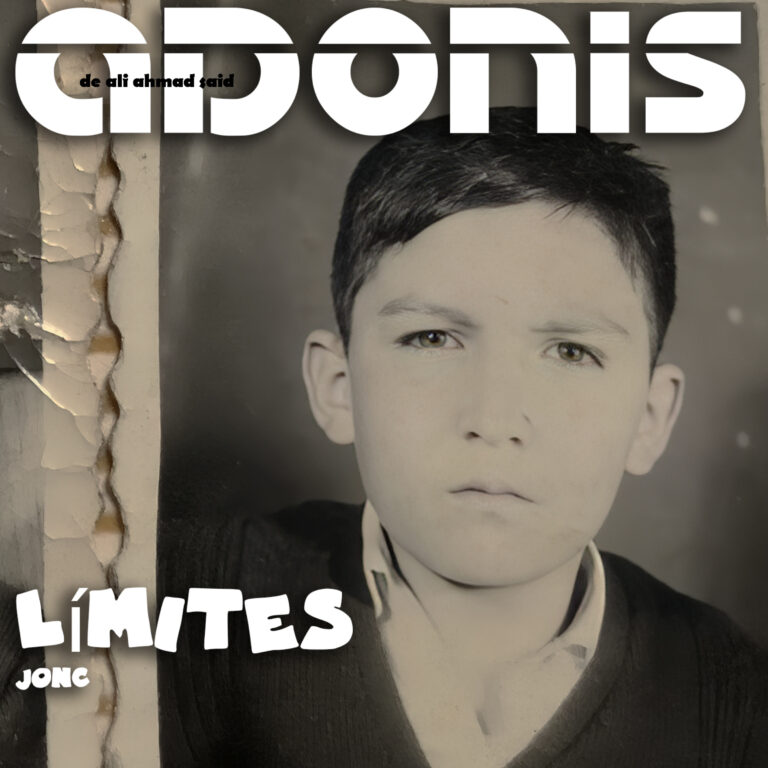
Este podcast tiene la intención de reproducir interpretaciones personales de algunos clásicos de la poesía universal. Entiendo, al igual que Octavio Paz, que la poesía es una actividad emocional revolucionaria, un ejercicio espiritual, un medio de liberación interior y una búsqueda de transfiguración. Adonis, Ali Ahmad Said y Octavio paz son mis favoritos. Dos clásicos modernos.
Este poema, como tantos otros, tiene que ver con los límites de la vida. Es un poema profundo y desconcertante, pero como todos en los poemas de Adonis nunca sabemos a dónde nos lleva sus impresionantes versos, es como no saber en qué puerto este barco llegará anclar.